 SRM University (SRMUH)
Introduction
War presents numerous obstacles, and one of the most significant is food security. When supply systems break and farming activities slow down, access to food becomes problematic. Countries must prepare carefully to ensure people still get enough to eat. Students studying in B.Sc. Agriculture colleges in Delhi typically teach how agriculture, policy, and technology join together to solve such real-world problems.
What is food security, and why is it important during war?
Food security means that all people have access to adequate, safe, and nutritious food at all times. During battle, this becomes tougher to sustain. Farms may be devastated, transportation can stop, and markets may close.
Without sufficient planning, food shortages can lead to starvation and social unrest. This is why governments work to keep food systems safe even when there is a war. Students in the B.Sc. Agriculture colleges in Delhi study these principles to understand how to manage food resources properly.
How can countries protect agricultural production?
One of the first actions is to preserve farming activity. Governments can support farmers with seeds, fertilizers, and equipment. Even during conflict, cultivation must continue as much as possible.
Some countries set up secure farming zones where farmers can labour with less risk. Others engage in indoor farming or greenhouse systems to lessen dependence on open land.
Students in the B.Sc. Agriculture colleges in Delhi learn about modern farming methods so that they can deal with problems like these in the future.
How do food storage and distribution systems help?
Storage plays a key part in food security. Countries routinely build enormous stocks of grains and other critical food commodities. These reserves can be used during emergencies.
Efficient distribution is equally vital. Even if food is available, it must reach people on time. To make sure everyone has fair access, governments may adopt rationing systems or controlled distribution.
Students in the B.Sc. Agriculture colleges in Delhi generally teach about supply chain management and storage methods that cut down on waste and make things work better.
What role does technology play in ensuring food security?
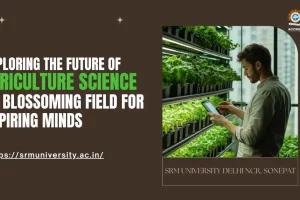
Technology has become highly significant in modern agriculture. During battle, it helps maintain production and monitor resources.
For example, satellite data can be used to track crop health. Automation can lessen the demand for manual work. Digital platforms can assist in managing supply chains and predicting shortages.
These improvements are commonly taught in the B.Sc. Agriculture colleges in Delhi, where students learn how to employ technology to improve agricultural outcomes even in tough settings.
How can international support improve food availability?
Countries that are at war often need support from other countries. International organizations and adjacent nations can give food supplies, cash, and technological support.
Trade agreements might also help in importing crucial food items. A lot of the time, humanitarian help stops people from becoming hungry during disasters.
Students in the B.Sc. Agriculture colleges in Delhi are encouraged to learn about how food systems work around the world and why countries need to work together.
How can SRM University, Delhi NCR, Sonepat, prepare you for a career in agriculture?
SRM University, Delhi NCR, Sonepat has great academic programs that teach both theory and how to apply what you study. Students learn about modern farming, how to be environmentally friendly, and how to manage food.
The university has advanced labs, research possibilities, and teachers who have been there and done that. It also stimulates creativity and real-world problem-solving.
If you are exploring B.Sc. Agriculture colleges in Delhi, such as SRM University, Delhi NCR, Sonepat, stand out as a place where students may gain the skills needed to address global concerns like food security. With the correct training and experience, students can help to develop a more stable and sustainable food system.