 SRM University (SRMUH)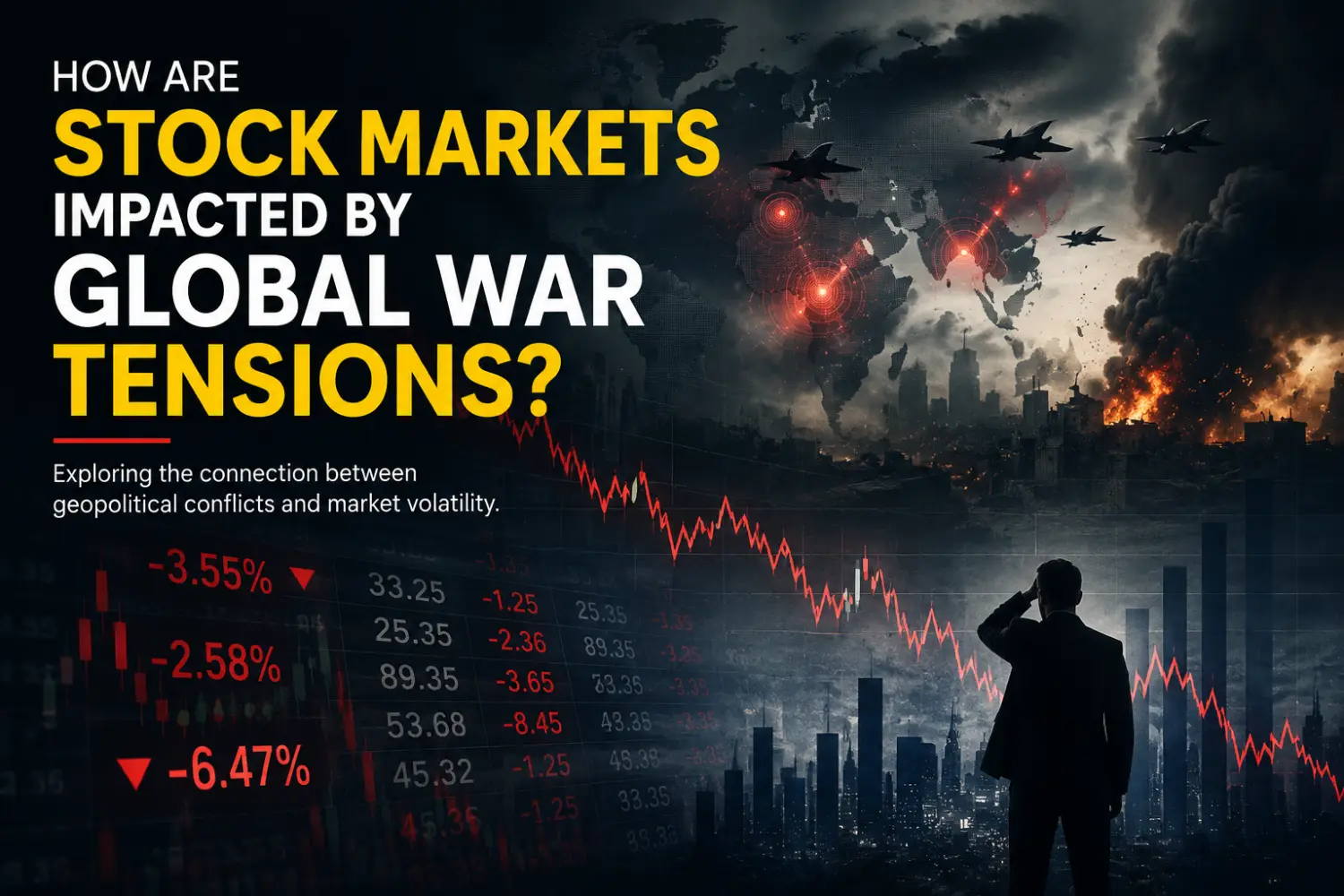
Introduction
Most people think of stock markets as something separate from world events. Numbers on a screen. Charts are going up and down. Something that finance professionals watch while the rest of the world gets on with life.
But spend a little time paying attention, and you start to notice something. Every time a major geopolitical event unfolds, markets move. Sometimes sharply. Sometimes, within minutes of a headline breaking.
A military escalation in one part of the world. A new round of sanctions between major economies. A conflict that threatens an important shipping route. Each of these events sends a signal through financial markets that ripples outward, affecting ordinary people, businesses, and economies far beyond the conflict itself.
For students at the best colleges for B.Com Hons in India, understanding this connection is not optional. It is one of the most practical and important things you can learn about how finance actually works in the real world.
Why Do Stock Markets React So Strongly to War Tensions?
To understand why markets move during conflict, you have to understand what drives them in the first place.
Markets run on confidence. When investors feel that the future is reasonably predictable, they are willing to put their money to work. They buy shares, they invest in companies, they take calculated risks because they believe those risks will be rewarded.
Conflict destroys that predictability.
When tensions escalate between countries or a war breaks out, nobody knows what comes next. Will supply chains be disrupted? Will governments impose new trade restrictions? Will energy prices spike? Will the conflict spread? These questions do not have clear answers in the early stages of any crisis. And markets hate uncertainty more than almost anything else.
The result is that investors begin withdrawing funds from riskier positions. They sell stocks. They move toward assets that feel safer. And when many investors do this at the same time, stock prices fall quickly.
The drop is not always rational or proportionate. Fear is a powerful force. And in financial markets, fear spreads fast.
Students at the best colleges for B.Com Hons in India study this relationship between investor psychology and market movements because it helps explain an important phenomenon. Markets are not just about numbers and formulas. They are about human behavior. And human beings react to uncertainty in predictable ways, even when the specific event that causes it is new.
Which Sectors Feel the Impact Most?
Not every part of the market responds to conflict in the same way. Some sectors suffer. Others actually grow. Understanding this distinction is one of the most practically useful things a commerce student can learn.
Defense is the most obvious sector that tends to benefit during periods of conflict or heightened tension. When governments feel threatened, they increase military spending. Companies that make defense equipment, weapons systems, cybersecurity tools, and military technology are seeing increased demand. Their stocks often rise when other sectors are falling.
Energy is another sector that reacts strongly. Many conflicts, particularly in the Middle East, involve regions that are critical to global oil and gas supply. When those supply routes are threatened, energy prices rise. That benefits energy companies even as it hurts consumers and businesses that depend on affordable fuel.
Commodities, such as metals, agricultural goods, and industrial materials, often become more expensive during conflict as supply chains are disrupted and demand shifts.
On the other side, tourism and aviation suffer almost immediately when tensions rise. People cancel travel plans. Airlines reduce routes. Hotels in affected regions empty out. Luxury goods also tend to see declining demand as consumers and businesses become more cautious with their spending.
Manufacturing and retail can face serious pressure too, particularly when conflict disrupts the supply chains that move raw materials and finished goods around the world.
Students at the best colleges for B.Com Hons in India analyze these sector-level patterns using real historical examples because the theory becomes much more meaningful when you can point to a specific conflict and trace exactly how each part of the economy responded.
How Do Investors Protect Themselves During Uncertain Times?
Experienced investors do not just sit by and watch their portfolios lose value during a crisis and hope for the best. They have strategies for managing risk when the environment turns unpredictable.
One of the most common moves is shifting toward so-called safe-haven assets. Gold has been a haven for centuries because it holds its value when everything else feels unstable. Government bonds, particularly from stable economies, are another common destination for money that is moving away from riskier stocks. These assets do not offer spectacular returns in good times, but they are reliable in turbulent markets.
Diversification is another key strategy. An investor who has put all their money into one sector or one country is completely exposed if that sector or country is hit hard by a conflict. An investor who has spread their money across different industries, geographies, and asset types has much more protection. If one part of the portfolio drops, other parts may hold steady or even rise.
Some investors take a longer view. They see a market drop as a temporary event and look for quality companies whose stock prices have fallen not because anything is fundamentally wrong with the business, but simply because the overall market is in a panic. Buying good assets at reduced prices and holding them through the uncertainty is a strategy that has worked well for patient investors across many historical crises.
The best colleges for B.Com Hons in India teach these strategies not as abstract theories but as practical tools that students will actually use in careers in finance, banking, and investment management.
Why Do Conflicts in One Country Affect Markets Everywhere?
This is one of the most important things to understand about how modern financial markets work.
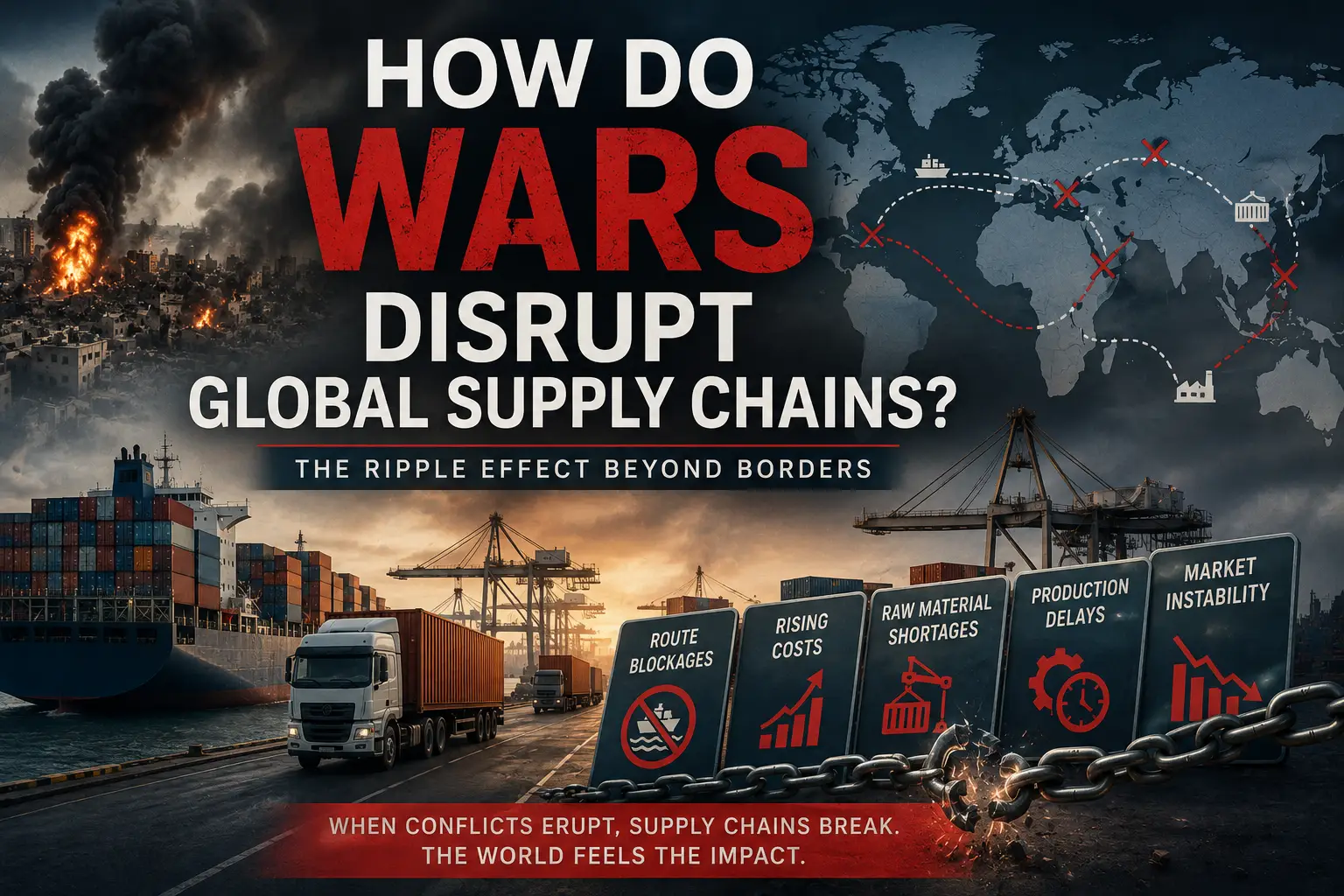
The global economy is deeply interconnected. Supply chains stretch across dozens of countries. Oil and gas flow through a small number of critical chokepoints. Financial systems in major economies are linked through trade, investment, and currency exchange.
When conflict disrupts any part of this system, the effects spread outward quickly.
Think about what happens when a major oil-producing region becomes unstable. Energy prices rise everywhere, not just in the countries immediately involved. Higher energy costs raise production costs for manufacturers worldwide. That flows through to higher consumer prices. Central banks need to consider how rising inflation affects their interest rate decisions. Stock markets adjust to reflect all of these downstream effects.
Or consider what happens when a conflict disrupts a major shipping route. Goods that were moving smoothly through that route now have to find alternative routes, which take longer and cost more. That delay ripples through supply chains and eventually shows up in higher prices and longer delivery times for businesses and consumers far from the original disruption.
Students at the best colleges for B.Com Hons in India study these global financial connections because understanding them is essential for anyone who wants to work in finance at any serious level. The days when you could understand a country’s economy without understanding how it connects to the rest of the world are long gone.
Can War Tensions Actually Create Opportunities in the Market?
This question makes some people uncomfortable. It feels strange to talk about opportunity in the context of conflict. But it is an important question for anyone who wants to understand financial markets honestly.
The answer is yes. Carefully and responsibly, market disruptions created by conflict can present genuine investment opportunities.
When markets fall sharply amid geopolitical tension, they often fall across the board. Good companies and struggling companies both see their stock prices drop, simply because the overall mood is fearful. For investors who can identify quality businesses caught up in a broad market selloff, not because of any real problem with the business itself but because of general panic, there can be real long-term value in buying at reduced prices.
Sectors that benefit from conflict, such as defense and energy, may see sustained demand increases that represent legitimate investment opportunities, even if those opportunities come with ethical considerations.
But all of this requires patience, careful analysis, and a clear-eyed assessment of risk. Trying to time a market during a geopolitical crisis is difficult and often goes wrong. The most successful investors in uncertain times are the ones who do their homework, understand what they own, and take a long-term view rather than reacting to every daily headline.
This balance between risk and opportunity is exactly what students at the best colleges for B.Com Hons in India are trained to navigate. Real market analysis requires both technical skill and good judgment. Both of those things can be learned.
How Can the Right Commerce Education Prepare You for This?
Understanding how war tensions affect stock markets is not just interesting; it’s essential. It is genuinely useful knowledge for a career in finance, banking, or business.
The professionals who handle investments, manage corporate finances, advise businesses on strategy, and work in financial markets all need to understand how global events translate into market movements. It is part of the job.
SRM University, Delhi NCR, Sonepat, builds this kind of real-world awareness into its B.Com Hons program from the start. Students do not just work through textbook theory. They engage with real case studies drawn from actual market events. They learn from faculty who bring genuine industry experience into the classroom. They develop analytical skills to examine a financial situation and understand not just what is happening but why.
For students looking at the best colleges for B.Com Hons in India, SRM University, Delhi NCR, Sonepat, offers a program that takes the gap between academic learning and professional readiness seriously. The goal is not just to help students pass exams. It is to help them build the kind of financial understanding that is genuinely valuable when they step into a career.
What Does This Mean for You as a Commerce Student?
The world is not going to become more stable or more predictable. Geopolitical tensions are a permanent feature of the global landscape. New conflicts will arise. New disruptions will hit supply chains, energy markets, and financial systems.
The commerce students who understand how these events connect to markets, who can read a geopolitical situation and think clearly about its financial implications, are the ones who will be genuinely useful to employers and genuinely prepared for the careers ahead.
That kind of understanding does not come automatically. It comes from studying real events, thinking critically about cause and effect, and building the financial knowledge that lets you make sense of what you are seeing.
The right education is where that starts.