
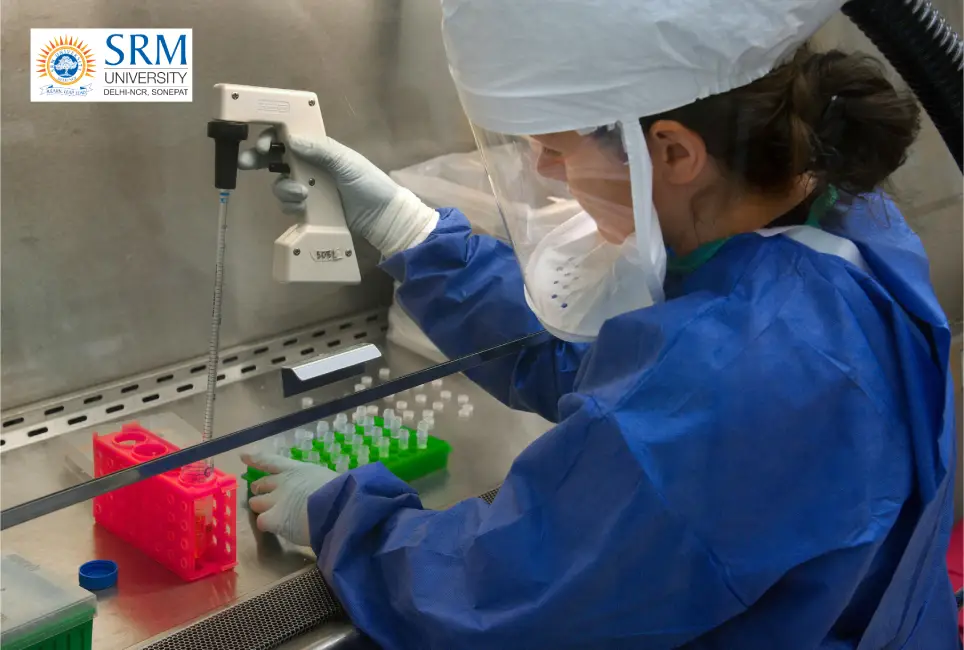
Food safety is an important global issue. Every year, millions of people fall ill after consuming unsafe and contaminated food. Harmful microorganisms like Salmonella, E. Coli and Listeria cause these illnesses. Foodborne diseases result in stomach infections, long-term health problems and death in the most severe cases. They even place a heavy burden on hospitals and public health systems all over the world.
Microbiologists usually play a crucial role in protecting the food supply. They detect and identify the harmful microbes in food, water, and the environment. They study how these pathogens spread and survive. Microbiologists also help design methods to prevent contamination and control outbreaks quickly. Students who are part of the best M.Sc microbiology colleges in India are trained in food safety, laboratory testing and modern diagnostic techniques. This education prepares them to support the public health efforts and contribute to safer food systems all over the world.
What Are Foodborne Pathogen Outbreaks?
Foodborne pathogen outbreaks happen when food becomes contaminated with harmful microorganisms and is then consumed by people. These outbreaks majorly impact many individuals at the same time and can spread rapidly across regions. Contamination can happen during food production, processing, storage, and preparation.
Some of the most common foodborne pathogens are:
- Salmonella causes diarrhoea, fever, vomiting, and abdominal pain. Severe infections might require hospitalisation.
- E.coli happens when some strains can cause blood diarrhoea and, in extreme cases, kidney failure in children and older adults.
- Listeria can survive in cold environments and is highly dangerous for pregnant women, newborns, older adults and immunocompromised individuals.
The World Health Organisation estimates that around 600 million people all over the world fall ill each year because of contaminated food. Nearly 420000 deaths are reported annually. These numbers show how serious foodborne diseases are. This data is widely taught in the best M.Sc microbiology colleges in India as an important example of applied microbiology and public health.
How Do Microbiologists Detect Outbreaks Quickly?
Rapid detection is crucial to control the foodborne outbreaks and prevent further infections. Early identification helps authorities to remove the contaminated food from the market and issue public warnings. Microbiologists use advanced methods like:
- Polymerase Chain Reaction (PCR) to detect the genetic material of pathogens with high accuracy
- ELISA tests to identify the toxins produced by bacteria in food samples
- Next-generation sequencing to study the genetic makeup of pathogens and track their overall speed.
These tools help scientists to identify the source of contamination and link cases during the outbreak. Students in the best M.Sc microbiology colleges in India receive practical training in these techniques, which helps them to understand real-world outbreak detection.
How Do Microbiologists Investigate Food Supply Chains?
Food can become contaminated at many stages before reaching the consumers. Understanding the entire food supply chain is critical for outbreak investigation. Some common contamination points are marked below:
- Agricultural farms, through soil, water, fertilisers, and animals
- Food processing units are affected by improper hygiene and equipment contamination
- Storage and transportation facilities where temperature control might fail
Microbiologists trace the contamination from the origin to the final product. They analyse samples from different stages of the supply chain to identify the source. Outbreak mapping, trace-back studies and risk assessment are key topics that are taught in the best M.Sc microbiology colleges in India.
What Are the Global Strategies to Control Foodborne Outbreaks?
Governments and international organisations use several strategies to manage and control foodborne diseases. These strategies focus on prevention, monitoring and quick response. Some key global approaches come up in the form of:
- Surveillance systems like PulseNet to detect outbreaks early
- International food safety standards, like Codex Alimentarius, regulate the food quality
- Public education campaigns to promote safe food handling and hygiene
Global cooperation is beneficial for countries to share outbreak data and laboratory findings. Students in the best M.Sc microbiology colleges in India study these systems to understand how food safety is managed on a global scale.
How Are Microbiologists Using Technology to Respond?
Modern technology has improved the speed and accuracy of outbreak response. Microbiologists depend on the following digital and analytical tools:
- Bioinformatics platforms to study the pathogen mutations and evolution
- Mobile-based reporting systems for real-time outbreak alerts
- Artificial intelligence models to predict high-risk food and locations.
New electrical sensors and rapid test kits help in the on-site detection of contamination. These technological advances are included in the course module of the best M.Sc microbiology colleges in India.
How Does Research in Microbiology Reduce Future Risks?
Research plays a crucial role in preventing future foodborne outbreaks. Scientists focus on understanding the microbial behaviour in food environments. Some of the major research areas are:
- Developing safe microbial cultures to improve food preservation
- Creating effective natural and chemical preservatives
- Studying how different microbes interact in the food systems
Students who are enrolled in the best M.Sc microbiology colleges in India actively take part in laboratory research. This experience helps them to develop the problem-solving skills needed to handle future food safety challenges.
How Are Microbiologists Collaborating Across Borders?
Foodborne outbreaks often cross national boundaries because of global trade. International collaboration is useful for effective control. Microbiologists work with:
- WHO and FAO to monitor the global outbreak trends
- Research institutions for genome sequencing and data sharing
- Regulatory agencies to coordinate the product recalls
Students in the best M.Sc microbiology colleges in India analyse the global case studies. This helps them to understand the international food safety policies and cooperation.
What Skills Are Most Valuable for Modern Microbiologists?
Modern microbiologists require technical and analytical skills to work effectively in food safety. Some important skills are:
- Advanced laboratory diagnostics
- Genomic and bioinformatics analysis
- Epidemiology and outbreak investigation
- Clear communication for public health messaging
These skills are core elements of the course module in the best M.Sc microbiology colleges in India.
Why Is SRM University Delhi NCR, Sonepat a Strong Choice for M.Sc. Microbiology Students?
SRM University Delhi NCR, Sonepat, is considered to be one of the best M.Sc microbiology colleges in India. It comes up with a balance of theory, laboratory training and research exposure. SRM University Delhi NCR, Sonepat offers:
- State-of-the-art laboratories for food microbiology and molecular biology
- Practical training in outbreak investigation and biosafety
- Learning modules on international food safety regulations
- Opportunities for industry internships and research collaborations.
Students at SRM University Delhi NCR, Sonepat, the best M.Sc microbiology colleges in India, get hands-on experience and global knowledge. This prepares students to address the foodborne pathogen outbreaks effectively and build successful careers in microbiology.
FAQs
1. Why are microbiologists important in foodborne pathogen outbreaks?
Microbiologists identify the harmful microbes, track their speed, and help to control the outbreaks. Their role is central to protecting public health.
2. Can M.Sc. Microbiology graduates work internationally in food safety.
Yes. Graduates who are trained in global standards, laboratory methods, and outbreak management can work in many countries.
3. Is SRM University Delhi NCR, Sonepat, suitable for applied microbiology research?
Yes. SRM University Delhi NCR, Sonepat, provides students with advanced research facilities, global exposure and practical training, which makes it a strong choice for applied microbiology studies.

