Introduction
Think about the last time you stayed somewhere that genuinely impressed you.
It probably was not just about the room. It was about how the person at the front desk made you feel when you arrived tired from a long journey. The small detail that showed someone had thought about what you might need. The meal was better than expected. The way a problem was handled before you even had to ask.
That kind of experience does not happen by accident. It is the result of skilled, thoughtful people doing their jobs exceptionally well. And in India right now, the demand for those people has never been higher.
India’s travel and tourism industry is expanding rapidly. More people are travelling for leisure, for business, and for experiences that go beyond the ordinary. Hotels are opening. Resorts are scaling. Airlines, cruise companies, and tourism organisations are growing to keep pace with a population that is travelling more than any previous generation.
For students considering colleges in Delhi for hotel management, this growth is not just background news. It is the landscape of the career they are about to enter.
Why Is India’s Travel Economy Growing So Quickly?
A few things are happening at once, and they are reinforcing each other.
Rising incomes across India’s middle class have created a much larger population of people who can afford to travel regularly, both domestically and internationally. This was happening before the pandemic. After it, the pent-up desire to travel, to see new places, to have real experiences after years of restrictions, accelerated the trend dramatically.
India is also becoming a more significant destination for international visitors. Cultural tourism, heritage sites, wellness tourism, and adventure travel are all drawing more visitors from abroad. The government has invested in tourism infrastructure as a priority, which means more hotels, more airports, more connectivity, and a greater need for the professionals who run them well.
At the premium end of the market, the growth is particularly striking. Luxury hotels, boutique properties, and high-end experiences are growing fast in India as the country’s wealthiest travellers increasingly choose world-class experiences close to home rather than travelling abroad for them.
All of this translates directly into professional opportunities for students coming out of colleges in Delhi for hotel management.
What Career Paths Are Actually Available?
This is one of the things that surprises many students when they start seriously exploring the field. Hospitality is far broader than most people assume from the outside.
Hotel management is the obvious path, but even within hotels, the roles vary enormously. Front office management involves the guest-facing operations that shape the first and last impression of every stay. Food and beverage management is its own discipline, requiring both operational skill and genuine knowledge of cuisine, wine, and dining service. Revenue management uses data and strategy to maximise occupancy and rates. Human resources in hospitality requires understanding the particular demands of a service environment.
Beyond hotels, the career landscape expands further. Event planning and management is a growing industry in which hospitality skills are directly applicable. Travel advisory and tour operations are evolving rapidly as travellers seek more curated experiences. Airlines and cruise lines hire hospitality professionals in significant numbers. Restaurant groups, clubs, and catering operations all need people trained in the same core capabilities.
Guest relations and experience design are emerging as specialisations in their own right, as properties compete on the quality of the experience they deliver rather than just the quality of their physical facilities.
Students at colleges in Delhi for hotel management who understand this breadth can build careers that evolve in genuinely interesting directions over time. The credential opens multiple doors. Which ones you walk through depends on where your interests and strengths take you.
How Is the Industry Itself Changing?
The hospitality industry is not standing still while it grows. It is also transforming in ways that create new opportunities for people entering it now.
Travellers today, particularly younger ones, are looking for something specific when they travel. They want experiences that feel genuine, personal, and memorable rather than standardised. A boutique property that reflects the character of its location. A dining experience that introduces them to regional cuisine. A wellness retreat that offers something they could not find at home. This shift toward experiential travel is creating demand for hospitality professionals who can design and deliver exactly this kind of experience.
Technology is reshaping operations significantly. Property management systems, digital check-in, AI-assisted customer service, and data analytics that predict guest preferences are all changing how hotels operate. Hospitality professionals who are comfortable with these tools and can use them to improve the guest experience have a meaningful advantage.
Sustainability is increasingly important. Travellers are paying more attention to the environmental practices of the properties they choose. Hotels are investing in sustainable operations, and they need people who understand how to implement and communicate those practices genuinely rather than superficially.
Students at colleges in Delhi for hotel management who are learning alongside these trends are entering the field with the right preparation for where it is heading, not just where it has been.
Why Does This Make Hospitality a Career Worth Taking Seriously?
There is a perception in some circles that hospitality is a fallback career. Something you choose when you are not sure what else to do.
That perception is outdated and inaccurate. Hospitality is a field that rewards genuine skill and genuine commitment with real career progression and genuinely interesting work.
The ability to manage a large operation with many moving parts. To lead and motivate teams in a high-pressure, service-focused environment. To understand what guests need and deliver it consistently at scale. To handle the unexpected calmly and solve problems in real time. These are capabilities that take years to develop well, and the professionals who develop them well are in serious demand.
The international dimension of hospitality is another real asset. Skills developed in hotel management transfer across countries. Professionals who want to work internationally find that their training is recognised and valued in hospitality markets around the world. The industry is genuinely global in a way that many others are not.
Students from colleges in Delhi for hotel management who commit to developing these skills are building careers with genuine longevity and variety.
Why Should You Consider SRM University Delhi-NCR, Sonepat?
The quality of a hotel management education depends enormously on how much practical exposure it provides alongside the academic content.
Hospitality is a hands-on field. You learn it by doing it. By managing real situations, handling real guests, and working through real operational challenges. A programme that is predominantly theoretical produces graduates who have to figure out the practical reality from scratch when they enter the workplace. A programme built around genuine industry exposure produces graduates who arrive ready to contribute.
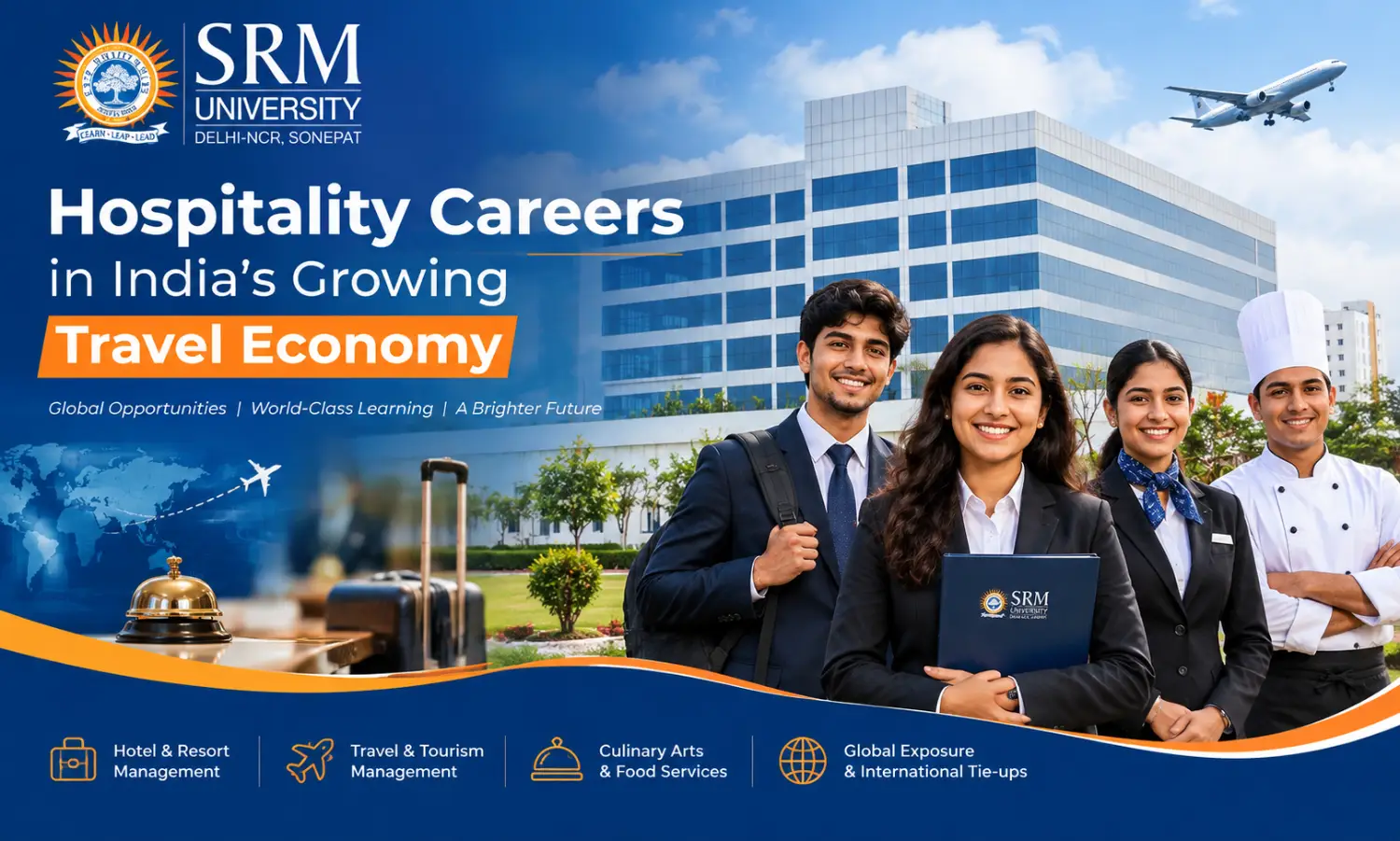
SRM University Delhi-NCR, Sonepat, SRMUH, approaches hotel management education with exactly this in mind. Students receive industry exposure, work with experienced faculty who bring real hospitality experience into the classroom, and develop the practical skills that employers in the hospitality sector are specifically looking for.
Among colleges in Delhi for hotel management, SRMUH offers a programme that is oriented toward producing professionals who are genuinely ready for the demands of the industry, not just technically qualified.
What Does Choosing This Path Mean for Your Future?
The travel economy is not a trend that is going to reverse. People will keep travelling. They will keep seeking experiences that matter to them. And they will keep returning to properties and organisations where the people make the difference.
The professionals who create those experiences, who manage the operations, lead the teams, design the guest journey, and maintain the standards that make a property exceptional, are doing work that is genuinely valued and genuinely needed.
If you are someone who takes satisfaction in making things work well for other people. Who enjoys the energy of an environment that is always moving. Who finds genuine pleasure in the moment when a guest leaves happy. Then this is a career that will reward you in ways that are not purely financial.
India’s travel economy is growing. The industry is evolving. And the students who enter it well prepared are stepping into something with real momentum behind it.
That journey starts with choosing the right education.
FAQs
Q.1: Why is the hospitality industry growing in India?
India’s travel economy is expanding due to rising incomes, increased domestic and international travel, growing interest in experiential tourism, and investment in tourism infrastructure. This growth is creating greater demand for skilled hospitality professionals.
Q.2: What career opportunities are available after studying hotel management?
Hotel management graduates can work in areas such as front office management, food and beverage management, revenue management, human resources, event management, travel and tour operations, airlines, cruise lines, restaurants, guest relations, and experience design.
Q.3: How is technology changing the hospitality industry?
Technology is transforming hotel operations through property management systems, digital check-in, AI-assisted customer service, and data analytics. Hospitality professionals who can use these technologies effectively can contribute to improving guest experiences and operational efficiency.
Q.4: Why is practical experience important in hotel management education?
Hospitality is a hands-on industry, so practical exposure helps students develop skills in handling guests, managing operations, solving problems, and responding to real workplace situations. Industry exposure alongside academic learning can help graduates become better prepared for hospitality careers.

