
 SRM University (SRMUH)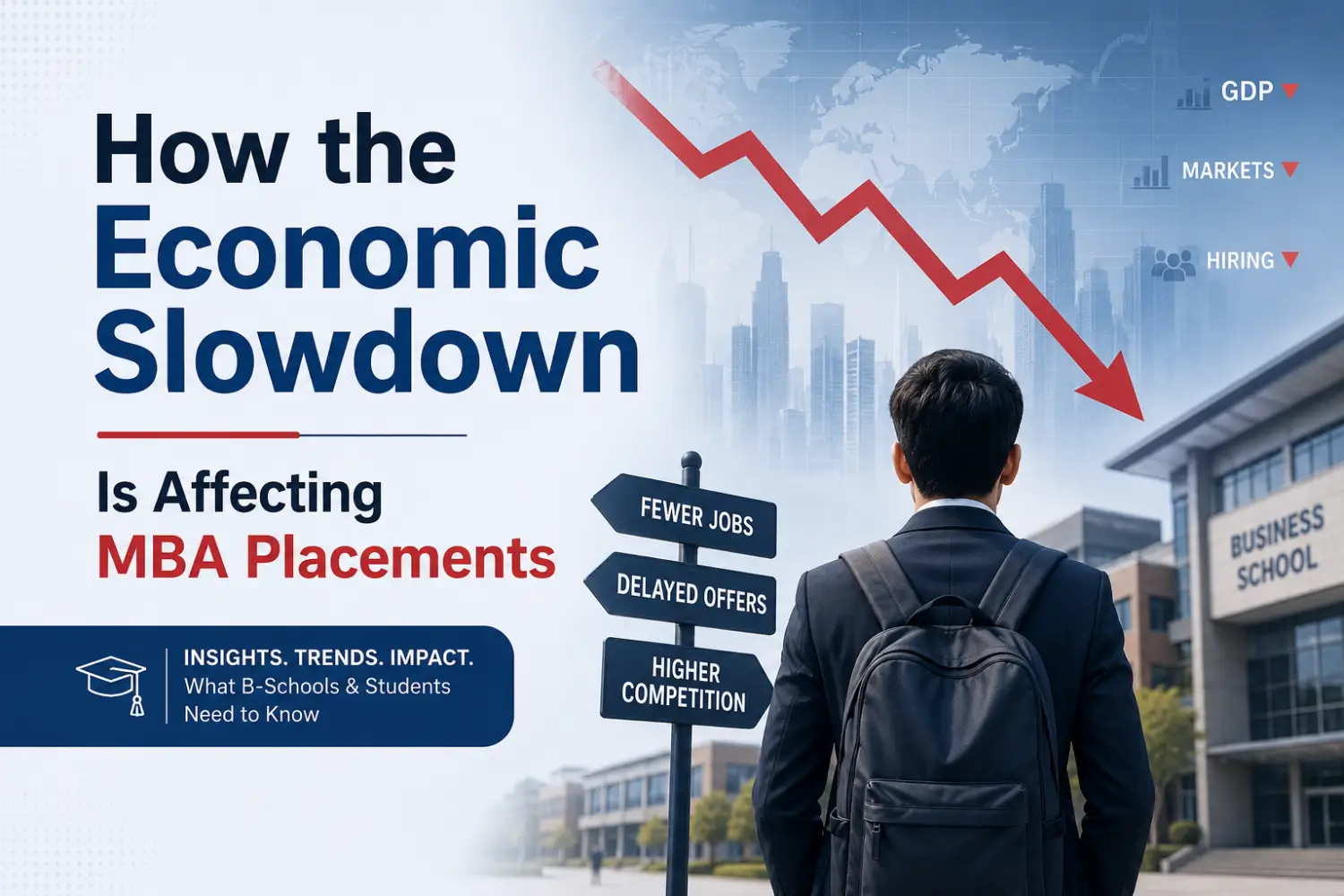
Introduction
Placement season has a particular energy on any MBA campus.
You feel it in the cafeteria conversations. In the way people suddenly start dressing more sharply at networking events. In a carefully casual way, everyone asks the same question without wanting to sound worried. What is the market like this year?
In a strong economy, that question is asked with quiet confidence. In a slow one, it carries real weight. And for students at good MBA colleges in Delhi, understanding the relationship between economic conditions and placement outcomes is not just useful. It is essential.
The good news is that the picture is considerably more nuanced than most students fear when they first start paying attention to headlines about slowdowns and hiring freezes. Yes, economic conditions affect placements. But how they affect them depends on which sector you are targeting, how well prepared you are, and how flexible you are willing to be.
What Actually Happens to Campus Placements During a Slowdown?
When the broader economy slows, companies pull back. That is a straightforward pattern that plays out in most downturns.
Expansion plans get put on hold. Budgets for new hires get reviewed more carefully. Decisions that would have been made in days start taking weeks. Open roles get frozen while leadership figures out what the next quarter looks like.
For MBA students watching this from campus, the visible effect is that fewer companies come to recruit, some companies that do come make fewer offers, and the timeline for decisions stretches out in ways that feel uncomfortable when you are watching classmates receive calls and waiting for your own.
Students preparing for MBA admission to strong programmes know they will eventually face this kind of cycle. It is not a new phenomenon. The economy has always moved in patterns. What matters is not avoiding a slowdown, which is impossible, but being genuinely prepared to navigate one.
And the starting point for that preparation is understanding that not every sector behaves the same way when conditions tighten.
Which Sectors Keep Hiring Even When the Economy Slows?
This is probably the most practically important thing to understand about placements during a slowdown, and it is the thing that gets the least attention in the panic around economic headlines.
Some sectors contract sharply when growth slows. Real estate tends to feel it early. Luxury goods and discretionary consumer spending pull back. Parts of the startup ecosystem that were funded on optimistic growth assumptions run into trouble when that optimism cools. Hiring in these areas can slow significantly during a downturn.
But other sectors behave very differently. Consulting often picks up during slowdowns, because companies that are cutting costs and trying to become more efficient need expert help doing it well. Healthcare is relatively insulated from economic cycles because the demand for medical care does not shrink when the economy does. Essential services continue at roughly the same level. Financial risk management becomes more important, not less, when markets are volatile.
Technology continues to hire in areas where the need is fundamental. Government programmes and public sector organisations often expand during downturns as social safety nets come under more pressure. Development sector organisations and NGOs working on economic resilience issues may also see increased activity.
Students at good MBA colleges in Delhi who understand this sector-level nuance are better positioned to make smart decisions about where to focus their energy during a difficult placement season. It is not about avoiding competition. It is about directing your effort where the real opportunities are.
How Are Companies Changing What They Look for During Tough Times?
When companies are being selective, the bar changes. Not just in terms of qualifications, but in terms of what they are looking for beyond qualifications.
During a boom, companies can afford to hire for potential and invest heavily in development. During a slowdown, they want people who can contribute quickly. Who understands the business context of their role? Who can take ownership of problems rather than needing extensive hand-holding? Who are comfortable with ambiguity and can make progress in environments where the path is not completely clear.
This raises the practical importance of everything that sits alongside academic performance. Internship experience where you faced real business challenges and delivered real results. Projects where you had to work through something complex and communicate your findings credibly. Industry knowledge that lets you walk into a first conversation with a company already understanding their competitive context.
Students targeting MBA admission at strong programmes should treat every internship and every project as preparation for exactly this moment. Because the difference between a candidate who can talk about business principles and one who can point to real situations where they applied them is significant to a recruiter who is being careful about every hire.
What Can You Actually Do to Be Better Prepared?
Preparation during a difficult market is not a different activity from normal preparation. It is the same activities done with more focus and more intentionality.
Building domain knowledge in the sectors where you want to work is something you can do consistently throughout your programme. Reading industry publications. Following the companies you are interested in. Understanding the regulatory and competitive environment that shapes their decisions. This kind of knowledge shows up in conversations and interviews in ways that are hard to fake and easy to notice.
Building your network early matters more than most students acknowledge until it is too late. The placements that happen first during tough markets often happen through connections rather than formal processes. The relationship you build with an alumnus a year before placement season can be more valuable than any amount of last-minute preparation.
Developing real skills, the analytical, communication, and problem-solving capabilities that every consulting and strategy role requires, has to be an active priority rather than something you assume the programme is delivering automatically. Certifications in relevant areas, participation in case competitions, and genuine engagement with the practical components of your MBA all contribute to this.
And flexibility matters. Students at good MBA colleges in Delhi who are open to different industries, different role types, and even different locations during their first year out significantly expand the range of opportunities available to them. Your first post-MBA role is rarely your last. Getting into a strong organisation and building a track record there is more valuable than holding out indefinitely for a single specific role.
Is an MBA Still Worth Pursuing During an Economic Slowdown?
This question comes up often, and it deserves a direct answer.
Yes. For most people who are genuinely suited to management careers, pursuing an MBA during a slowdown is still a sound decision.
Here is why. An MBA programme typically takes one to two years. The economy during that period is not the economy you will graduate into. Downturns end. Hiring picks up. Markets recover. The cycle moves. And when it does, the students who used the programme productively, who built real skills and real networks and real credibility, are the ones who benefit most from the recovery.
There is also something to be said for the MBA itself as a signal. Companies that are being highly selective during a slowdown are looking for candidates who demonstrate capability clearly. A strong MBA from a programme with credible placements is part of how you do that.
The students who approach MBA admission during uncertain times with clear-headedness and a genuine commitment to getting the most from their programme consistently come out well. The ones who treat the degree as a waiting room until conditions improve generally do not.
Why Should You Consider SRM University Delhi-NCR, Sonepat?
The quality of an MBA experience and the quality of placement support vary considerably between institutions. This matters in any market. In a difficult one, it matters more.
SRM University Delhi-NCR, Sonepat, SRMUH, runs its MBA programme with a clear focus on preparing students for the reality of the job market rather than just the theory of management. The curriculum is grounded in real-world application. Internships are integrated into the programme meaningfully. Students work on actual business problems and develop the practical skills that recruiters are looking for when they are being selective.
The career support at SRMUH is genuine. Interview preparation, industry connections, placement guidance, and access to a network of alumni who have navigated their own career transitions. In a market where the difference between a prepared and an unprepared candidate is pronounced, this kind of support matters.
For students looking at good MBA colleges in Delhi with an eye on what actually happens on the other side of graduation, SRMUH is worth considering seriously.
What Should You Take Away From All of This?
Economic slowdowns are real. They affect placements. Pretending otherwise would not be honest.
But they are also temporary. And they are navigable for students who are prepared, informed, and genuinely committed to making the most of their programme.
The students who do best during difficult placement seasons are not always the ones with the highest GPAs or the most prestigious pre-MBA backgrounds. They are the ones who understand the market well enough to know where the real opportunities are. Those who have built skills and experience that make them genuinely useful to an employer who is being careful. Who are flexible enough to pursue opportunities that lead somewhere good, even if they do not look exactly like what was originally planned.
An economic slowdown is not a reason to hesitate about your MBA. It is a reason to be thoughtful about how you approach it.
That thoughtfulness starts now.