 SRM University (SRMUH)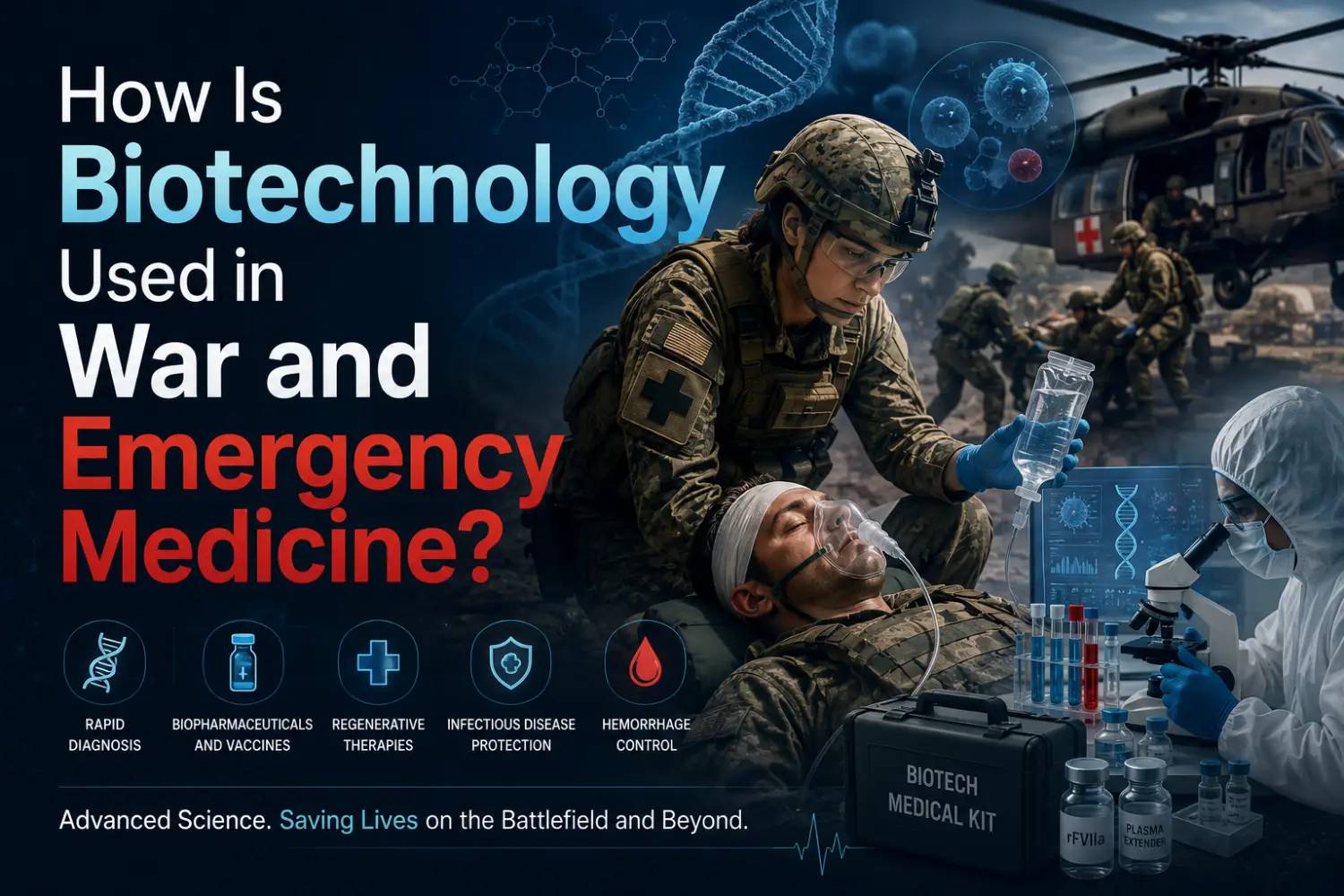
Introduction
Close your eyes for a moment and picture a field hospital out there in the thick of a war zone.
Pharmacies nearby are not adequately stocked. No top-flight labs. No time to wait for the test results to get back from a city hospital. A soldier enters with a serious cut that shows signs of infection. A doctor has minutes, not hours, to find out what they’re dealing with and how to treat it.
This scenario is where biotechnology comes in discreetly and changes the game.
It is tempting to imagine biotechnology as something that happens in clean, well-lit research facilities. And it does. However, the scientific advancements originating from these laboratories eventually reach the most challenging and remote areas of the world. Combat zones. Zones of disaster. Overcrowding of refugee camps. Places where medicine must work quickly, well, and with little.
This side of the field brings the subject to life in a whole different way. Students seeking the best biotechnology colleges in India after 12th should be aware of this.
What Does Biotechnology Actually Do in a War Zone?
War creates a unique type of medical emergency. The wounds are grave. They spread infections swiftly. Supplies dwindling. And the ones trying to help are typically working in untenable circumstances.
This is where biotechnology comes in, both practically and profoundly.
Diagnostics, for example. In a typical hospital, finding an infection can mean sending off a sample and waiting. In a war zone, that wait can cost a life. Biotech has developed portable diagnostic equipment that can detect illnesses, viruses, and bacterial strains within minutes. The field medic gets a quick answer and can act right away.
And then there are the drugs themselves. Antibiotics, clotting agents, wound-care compounds. Many of these are the fruits of biotechnology. When normal supply lines break, the ability to create medicines rapidly and efficiently during a battle becomes crucial. Biotechnology makes this possible.
Students of the best biotechnology colleges in India after 12th grade don’t merely study these things in theory. They learn how these tools are made, how they work, and how to get them to those who need them.
How Does Biotechnology Change Emergency Medicine?
Biotechnology is changing emergency medicine in several ways.
And think about what emergency medicine truly asks of science. It wants pace. Precision. Solutions for chaotic, uncertain environments.
Biotechnology has met that challenge in some spectacular ways.
One of the biggest breakthroughs is portable diagnostic kits. They are small, easy to use, and quite accurate. In a disaster zone, a healthcare worker can test a patient for infections or diseases right there on site. No lab required. No wait. All that’s needed is a straightforward explanation and a clear path forward.
Biotechnology has had a big impact on another area, blood. Natural blood has an extremely short shelf life and needs to be stored with great care. Researchers have been working on blood replacements, goods generated through biotechnology that can do the same job in an emergency when actual blood isn’t accessible. This is the type of innovation that doesn’t make the front pages but literally saves lives.
Another frontier is tissue engineering. Biotechnology provides the means to reconstruct damaged tissue and develop skin grafts that assist the body in healing faster and with fewer difficulties when someone has serious burns or loses a limb.
These are not technologies for the future. They are being investigated, refined, and applied right now. The best biotechnology colleges in India after 12th grade are training the next generation of scientists who will take this work further.
How Are Medicines and Vaccines Made During a Crisis?
Here’s something most people don’t think about until it’s an emergency. Wars and disasters are not simply about physical injuries. They are the perfect breeding ground for disease outbreaks.
Overcrowded shelters. Broken water systems. Overburdened health infrastructure. That means that in a crisis or catastrophe zone, infectious diseases can spread at a horrifying rate.
Biotechnology is one of the most effective tools we have to fight back.”
With genetic engineering, scientists can make vaccinations faster than ever before. Instead of taking years to develop and test a standard vaccination, scientists may now build a vaccine at the molecular level and reach testing much faster. We experienced this in real life during a recent global health emergency when vaccines were manufactured in record time and disseminated to billions of people.
In a war or crisis, this speed is very important. A quickly responding vaccine helps contain an early outbreak. Anything that isn’t can become a secondary disaster on top of all of the other disasters already happening.
These strategies are studied attentively by the best biotechnology colleges in India after the 12th for students. They study the science underlying the quick development of vaccines and how biotechnology converts a crisis into a solvable problem rather than an uncontrollable one.
How Does Biotechnology Help People Who Are Badly Injured?
Injuries that a generation ago would have been fatal or permanently debilitating can today be survived. Biotechnology has a key role to play in this.
One of the most fascinating areas within this arena is regenerative medicine. The science is difficult, but the concept is simple. What if we could really enable the body to repair what was lost, rather than just manage an injury?
Researchers are working on bioengineered skin grafts that would help serious burn victims heal faster and with less scarring. Using a patient’s own cells to produce artificial organs lowers the chance of rejection. Smart wound dressings containing biological chemicals actively combat infection while the wound heals.
In a conflict zone or disaster site, these technologies are the difference between someone losing a limb and keeping it. Between months of recuperation or years. between a life with major ongoing issues and a restoration to anything near normal.
This is meaningful territory for a student interested in healthcare and research. The best biotechnology colleges in India after 12th grade give students a scientific foundation so that they can ultimately contribute to such jobs.
Are there ethical issues that come with all of this?
Yes. And this is a conversation that is as important as the research itself.
Biotechnology is a really strong collection of tools. Like any strong tool, it can be used for good or evil. The stakes are higher in conflict scenarios. In the wrong hands, the same processes that developed life-saving vaccines can be used to design deadly biological weapons. This is not a comforting concept, but it is a genuine one.
There are questions about genetic tinkering. The long-term ramifications of changing the genetic makeup of an organism, even with the best of intentions, are not always recognized. Who will decide what modifications are acceptable? Who gets to use these technologies? Who pays the price when things go wrong?
These are not easy questions to answer. But these are concerns that every student of biotechnology genuinely has to think about. Ethical awareness is no soft add-on to a science education. It’s part of the responsibility of being a scientist.
How Can the Right College Set You Up for a Career in Biotechnology?
The best biotechnology colleges in India after 12th make sure students get to interact with these questions sincerely. Together, they teach the science and the responsibilities that go with it.
Choosing the right college can give your career in biotechnology a jumpstart.
If you are finishing school and wondering where to study biotechnology, here is what you really need to be looking for. A place that takes the research seriously and ties it to the actual world. A place where you’re not just sitting in lectures but actually doing stuff.
Biotechnology is a pragmatic discipline. You require labs. You require research experience. You need teachers who’ve been in the field and can show you how theory becomes practice.
And this is exactly what SRM University, Delhi NCR, Sonepat is built on. Students have access to contemporary labs and research facilities early in their curriculum. They are working on real projects. Learn from faculty with real industry and research expertise in the classroom. The setting promotes curiosity, experimentation, and the kind of scientific thought that results in actual breakthroughs.
When it comes to the finest biotechnology institutions in India after the 12th, SRM University, Delhi NCR, Sonepat, delivers what is more difficult to discover than it should be. A program that gets you ready for the world as it is, with all its complexity and urgency.
Why Does Any of This Matter to You?
The connection between biotechnology and conflict may appear to be a specialist subject. But truly, it’s a window into why this field is so important.
Biotechnology is saving lives at a time when life is most vulnerable. It meets people when they’re at their most vulnerable and offers medicine and the skills to respond. The scientists who created these discoveries didn’t begin their careers working in war medicine or disaster response. Originally, they had been interested in biology. They followed the science. And eventually their effort ended up mattering in ways they probably never dreamed of.
That may be your story too.
With the correct education and a good attitude, you may be part of what’s ahead in this industry. The tools are improving. The troubles are becoming more complicated. And the need for people who grasp both the science and the duty has never been more urgent.
It begins with where you get your education.