 SRM University (SRMUH)
Introduction
Some parts of the world have been in conflict for so long that it is easy to forget there was ever a time without tension.
The Middle East is one of those places. The disputes there are layered and complicated. History, religion, land, politics, and the interests of powerful nations outside the region all pull in different directions at once. And sitting in the middle of all of it, trying to hold things together, is the United Nations.
The UN does not always succeed. Anyone who follows international news knows that. But the work it does, the negotiations it facilitates, the peacekeepers it deploys, the humanitarian aid it coordinates, matters enormously to millions of real people.
For students exploring private law colleges in India, studying how the UN operates in the Middle East is not just an academic exercise. It is a window into how international law actually functions when the stakes are highest.
What Is the UN and What Does It Actually Do?
The United Nations was built on a simple but ambitious idea. Those countries, no matter how different from each other, could sit in the same room, talk through their disagreements, and find ways to avoid the worst outcomes.
It was founded after the Second World War, when the world had just seen what happens when international cooperation breaks down completely. The goal was to create a permanent space for dialogue, a place where disputes could be argued with words rather than weapons.
Today, the UN brings together almost every country on earth. Its work spans an enormous range of issues. Maintaining international peace and security. Protecting human rights. Delivering humanitarian aid. Developing international law. Helping countries coordinate on everything from climate change to public health to refugee crises.
At its core, the UN is a system for managing the fact that countries have conflicting interests and that those conflicts need a place other than a battlefield.
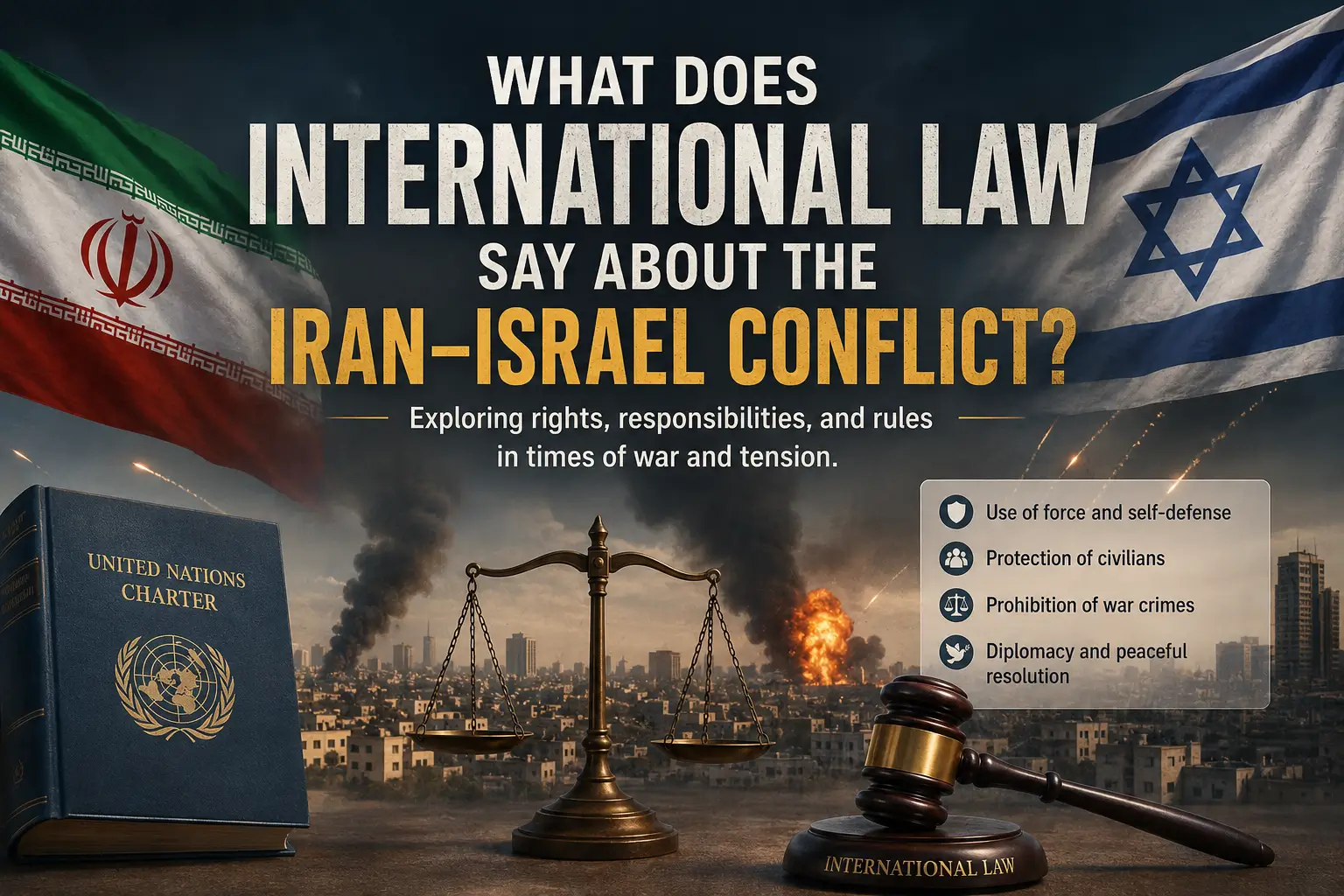
For law students at private law colleges in India, the UN is not just a political institution. It is a legal one. The conventions, treaties, and resolutions it produces form a significant part of the framework of international law that governs how states are expected to behave toward each other and toward their own people.
How Does the UN Try to Resolve Conflicts?
When two countries, or two groups within a country, are in serious conflict, the UN has several tools at its disposal.
The most important of these is dialogue. The UN actively works to bring opposing sides to the table, create the conditions for conversation, and put forward proposals that both parties can seriously consider. This is harder than it sounds. Countries in conflict often have deep grievances, strong domestic political pressures, and very little trust in the other side. Getting them to talk at all is sometimes a significant achievement.
The UN Security Council has particular power in this process. It is the body within the UN with primary responsibility for international peace and security. It can pass resolutions calling for ceasefires, imposing sanctions, authorizing military action, or establishing the terms of a peace process. Its decisions carry real legal weight under international law.
In the Middle East, the Security Council has been involved in numerous conflicts over many decades. Its resolutions have shaped negotiations, defined legal frameworks for disputed territories, and established the parameters within which peace processes have been attempted.
Understanding how the Security Council works, how its decisions are made, how vetoes are used, and what makes a resolution enforceable or not is essential knowledge for any law student interested in international relations. Private law colleges in India that teach international law devote considerable time to these mechanisms.
What Do UN Peacekeeping Operations Actually Involve?
Peacekeeping is one of the most visible things the UN does. But it is also one of the most misunderstood.
UN peacekeepers are not an army in the traditional sense. They are soldiers, police officers, and civilian personnel from member countries, deployed to conflict zones under UN authority. Their job is not to fight. It is to create the conditions for peace to take hold.
In practice, that means monitoring ceasefires to ensure both sides honor their commitments. It means protecting civilians in areas where local security forces cannot or will not do so. It means supporting the political processes that are supposed to lead to longer-term stability. And it means being present in a way that makes it harder for violence to restart.
The Middle East has seen UN peacekeeping operations for decades. The United Nations Interim Force in Lebanon, known as UNIFIL, has been operating since 1978. The United Nations Disengagement Observer Force, or UNDOF, monitors the ceasefire between Israel and Syria. These are not small operations. They involve thousands of personnel and represent an ongoing international commitment to preventing further escalation.
India has historically been one of the largest contributors of troops to UN peacekeeping missions, which makes this area of international law particularly relevant for Indian law students. Understanding the legal framework that governs peacekeeping, the rules of engagement, the rights and responsibilities of peacekeeping forces, and the accountability mechanisms that apply when things go wrong is a significant part of a serious international law education.
Students at private law colleges in India who study these missions gain a concrete understanding of how international cooperation operates at the operational level, not just in theory.
How Does the UN Help People Caught in Conflict?
Behind every political negotiation and every Security Council resolution, human beings are living through extremely difficult circumstances.
When conflict breaks out, the immediate consequences for ordinary people are devastating. Homes are destroyed. People are forced to flee. Food and clean water become scarce. Medical care disappears. Families are separated. Children stop going to school.
The UN’s humanitarian work directly addresses these consequences. Through agencies like UNHCR, which focuses on refugees and displaced people, UNICEF, which works primarily with children, and the World Food Program, which delivers food assistance in crisis zones, the UN coordinates an enormous global response to the human cost of conflict.
In the Middle East, this work is on a vast scale. The Palestinian refugee situation, which UNRWA has been working on since 1949, represents one of the longest-running humanitarian operations in the world. The conflicts in Syria and Yemen have created some of the largest displacement crises in recent history. The UN has been central to the international response to all of these.
For law students, the humanitarian dimension of conflict raises its own set of legal questions. What rights do refugees have under international law? What obligations do host countries have toward displaced people? What protections does international humanitarian law provide for civilians in conflict zones? What happens when those protections are violated?
These are not abstract questions for a classroom exercise. They are live legal issues with real consequences for millions of people right now. Private law colleges in India that take international law seriously bring exactly these questions into their curricula.
What Limits Does the UN Face in the Middle East?
It would be dishonest to discuss the UN’s role in the Middle East without acknowledging how often it falls short.
The UN operates by consensus among its member states. And member states, particularly the permanent members of the Security Council, have their own interests that do not always align with what peace in a particular region would require. Any of the five permanent members, the United States, the United Kingdom, France, Russia, and China, can veto a Security Council resolution. This single mechanism has blocked action on numerous occasions when the geopolitical interests of a powerful country conflicted with the broader international community’s wishes.
There is also the fundamental issue of enforcement. The UN can pass resolutions. It can call on countries to comply with international law. But it has limited ability to compel compliance when a powerful state, or one backed by a powerful patron, decides to ignore it.
Resources are another constraint. Peacekeeping missions are expensive. Humanitarian operations are expensive. And the funding that member states provide never fully matches the scale of what is needed.
None of this means the UN is without value. But it does mean that international institutions are not magic solutions. They are imperfect mechanisms that work better in some situations than others, and that depend entirely on the political will of the countries that make them up.
This is exactly the kind of nuanced analysis that law students need to develop. Private law colleges in India that engage seriously with international law do not just teach students what the rules say. They teach students to think critically about when those rules work, when they do not, and why.
How Can the Right Legal Education Prepare You for This Field?
If international law genuinely interests you, the quality of your legal education matters a great deal.
International law is a demanding area. It requires a strong foundation in legal principles, a genuine understanding of history and geopolitics, the ability to analyze complex multilateral documents, and the communication skills to argue positions clearly, both in writing and in person.
SRM University, Delhi NCR, Sonepat, approaches legal education with all of this in mind. The law programs cover international law, human rights, and global governance as substantive areas of study, not just passing references. Students engage with moot courts that simulate real legal proceedings, giving them practice in constructing and defending arguments under pressure. Internship opportunities connect students with the legal profession while they are still studying, so they arrive at their first job with genuine experience rather than theory alone.
For students looking at private law colleges in India, SRM University, Delhi NCR, Sonepat, offers an environment where the gap between the classroom and the real world is taken seriously and actively bridged.
Why Does Any of This Matter to You?
The conflicts in the Middle East can feel distant. The mechanisms of the UN can feel bureaucratic and abstract. But the legal questions they raise are among the most important ones in the world right now.
What gives an international institution the authority to intervene in a conflict? What rights do civilians have when their government fails to protect them? What does accountability look like when international law is violated? How do you build a legal framework that countries with vastly different interests can actually agree to follow?
These are not questions with easy answers. But they are questions that lawyers, diplomats, policymakers, and international law scholars spend their careers working on.
If you are drawn to law because you want your work to connect to the biggest issues of your time, international law is a field where that connection is direct and real.
And the right legal education is where that journey starts.