Part of SRM Group of Institutions

  • Get Connected
  • Get Social

CRISPR-Cas Technology: Principles and Industry Applications

CRISPR-Cas Technology: Principles and Industry Applications

Image
Image
Image
Image

Introduction

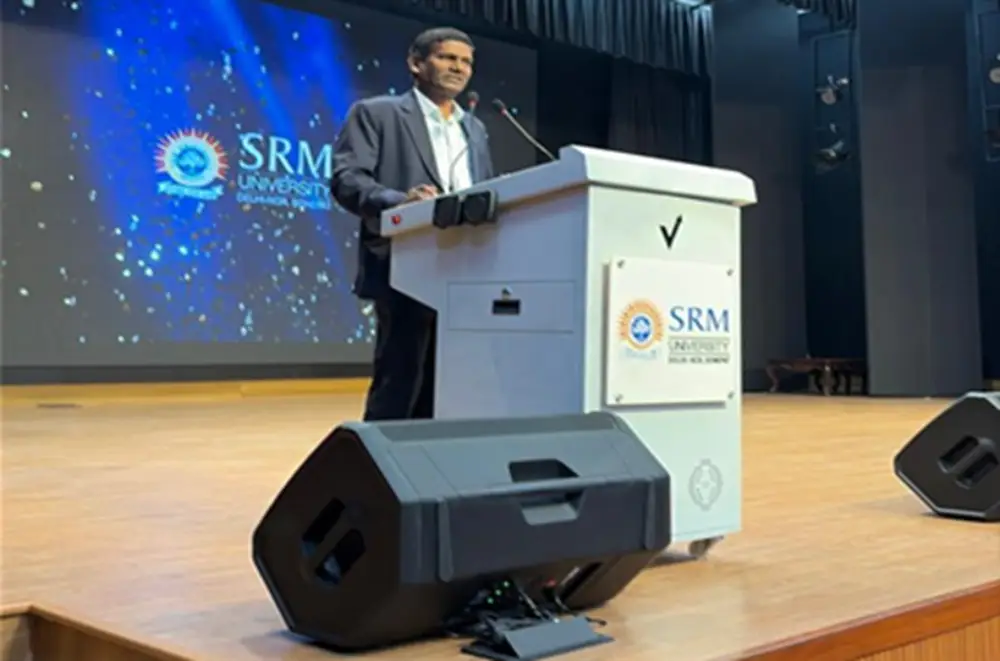
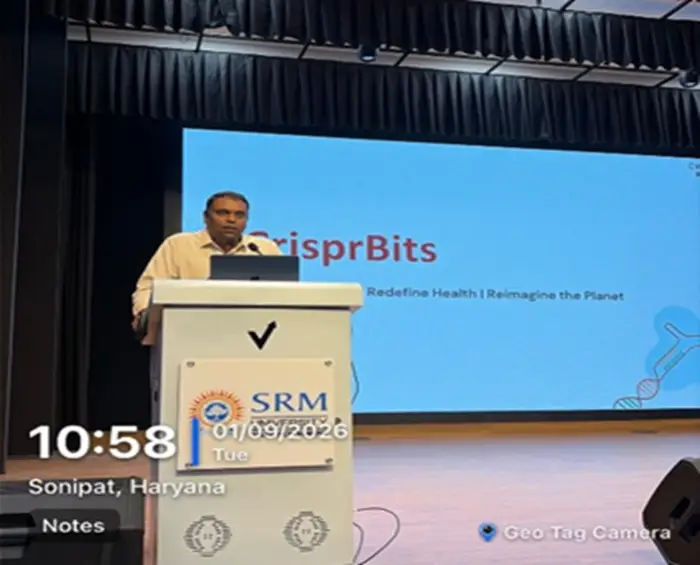
SRM University, Delhi-NCR, Sonepat organized a lecture on the nobel prize winning CRISPR/Cas9 gene editing technology for students of Science and Engineering on 1st September 2026. The session was delivered by Dr. Arvind Murali Venkatesan, Chief Executive Officer of CrisprBits, a biotechnology company working on CRISPR-based genome engineering, disease modelling, and rapid diagnostics. The lecture aimed to introduce students to the fundamentals of CRISPR-Cas gene-editing technology and to give them an industry perspective on how the science translates into real-world products and applications.

The event was well attended by students and faculty members, reflecting the growing interest among the scientific and engineering community in biotechnology, genetic engineering, and the intersection of biology with modern computational and engineering tools.

About the Speaker and CrisprBits

Dr. Arvind Murali Venkatesan brings extensive experience at the intersection of life sciences research and industry, with a background in translating complex scientific concepts into viable, scalable healthcare solutions. As Chief Executive Officer of CrisprBits, he leads the company's efforts to make CRISPR-based technologies accessible and affordable.

Key Highlights

Fundamentals of CRISPR-Cas Technology

Dr. Venkatesan opened the session with an accessible introduction to CRISPR-Cas systems, tracing their origin as a bacterial immune mechanism against invading viruses and explaining how this natural system has been adapted into one of the most versatile gene-editing tools available today. Key points covered included:

  • The basic biology of CRISPR-Cas9: guide RNA design, the Cas9 enzyme, and the mechanism of targeted DNA cleavage and repair.
  • The evolution of CRISPR tools beyond Cas9, including Cas12-based systems used for diagnostic applications.
  • How CRISPR differs from earlier gene-editing methods, such as zinc-finger nucleases and TALENs, in terms of precision, cost, and ease of use.
  • Real-world applications of CRISPR across human health, agriculture, and environmental monitoring.
CrisprBits' Technology Platforms and Company Initiatives

The second part of the lecture focused on how CrisprBits has built its business around CRISPR science. Dr. Venkatesan walked students through the company's platform areas, which broadly cover:

  • Genome engineering tools aimed at making precise gene editing more accessible for research and therapeutic development.
  • Disease-modelling platforms that use CRISPR to create accurate models for studying genetic and infectious diseases.
  • Rapid, CRISPR-based diagnostic tests designed for point-of-care use, including work on detecting drug-resistant infections and other pathogens.

He also spoke about the practical challenges of moving CRISPR research from the laboratory to affordable, scalable products, touching on regulatory considerations, manufacturing at scale, and the importance of partnerships with diagnostics and healthcare organizations to reach patients.

Interactive Session

The lecture concluded with an interactive question-and-answer session in which students engaged with the speaker on topics such as career pathways in biotechnology and gene-editing research, the ethical considerations surrounding gene editing, and the technical and commercial hurdles involved in bringing a CRISPR-based product to market.

Conclusion

The guest lecture served as a valuable bridge between academic learning and industry practice, giving students of Science and Engineering a first-hand view of how cutting-edge biotechnology is developed and deployed. The session encouraged students to explore interdisciplinary research and reinforced the relevance of engineering thinking in solving problems in the life sciences. SRM University, Delhi-NCR, Sonepat extends its appreciation to Dr. Arvind Murali Venkatesan and CrisprBits for sharing their time and expertise with the student community.

CRISPR-Cas Technology: Principles and Industry Applications

  • Start Date

    01 September 2026

  • Venue

    University Auditorium

  • Organiser

    Department of Biomedical Engineering

share

Increase Text Decrease Text Dark Mode Light Mode Reset
SRMUH Third Convocation 2025