Introduction
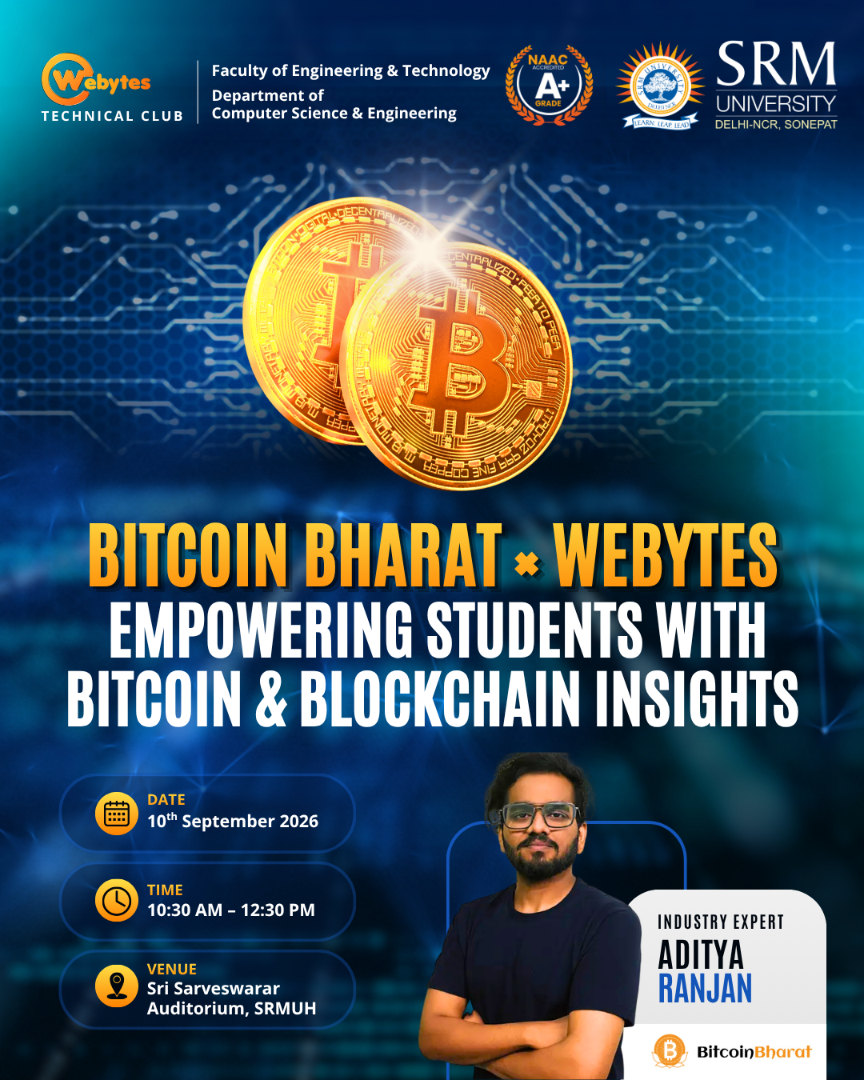
The Bitcoin India Tour – Sonepat Edition was successfully conducted at SRM University,
Delhi-NCR, Sonepat, in collaboration with Webytes and BitcoinBharat. The session was
designed to provide students with an interactive and practical introduction to Bitcoin,
blockchain technology, digital assets, and the concepts underlying decentralised
financial systems.
The event aimed to move beyond common perceptions of Bitcoin and introduce students
to its technological foundations, including decentralisation, blockchain, Bitcoin
transactions, nodes, mining, Proof of Work, digital wallets, and self-custody. The
session also provided students with practical exposure to digital wallets and peer-to-peer
applications.
Event Overview
The programme commenced at 10:30 AM with a warm welcome to the participants,
followed by an introduction to the Bitcoin India Tour and an overview of the objectives
of the session. The programme was conducted through a series of informative,
interactive, and practical activities designed to familiarise students with Bitcoin and
emerging digital technologies.
The event comprised the following stages:
- Welcome and Opening of the Session
- Introduction of the Speaker, Industry Expert Aditya Ranjan
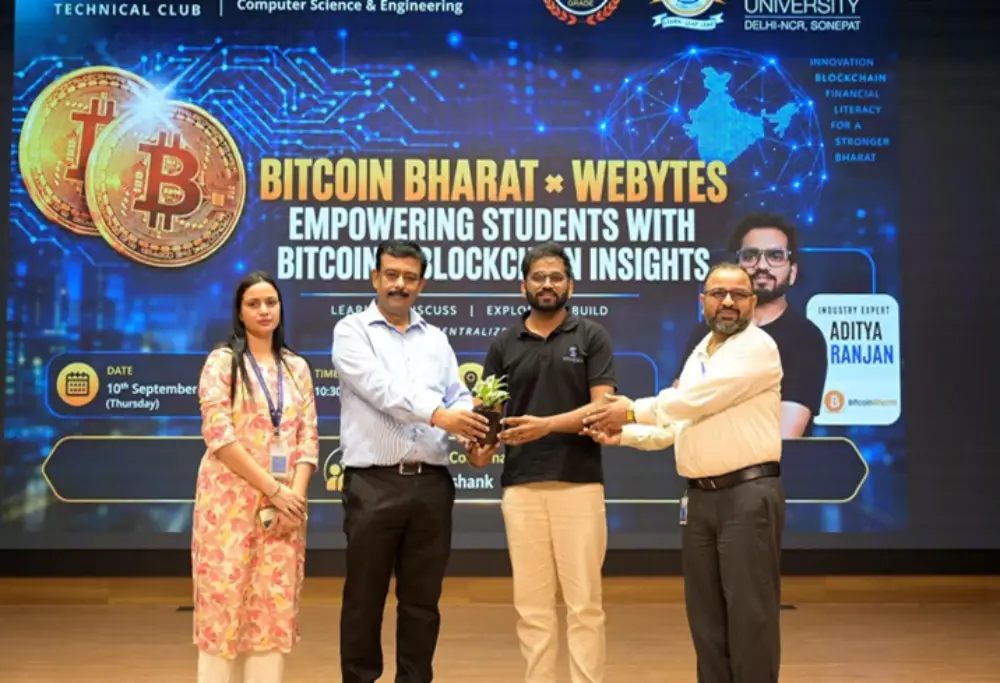
- Felicitation of the Speaker
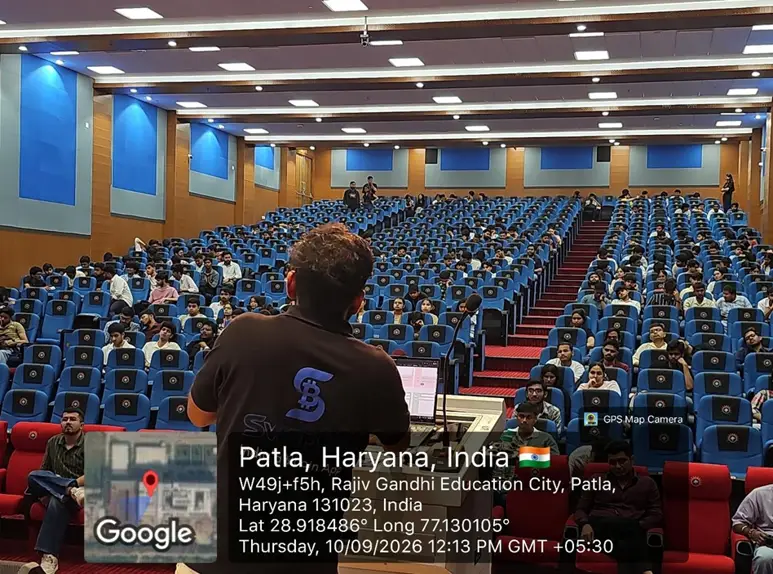
- Interactive Main Session on Bitcoin and Related Technologies
- Practical Wallet Activity and Introduction to the Keet Application
- Interactive Question-and-Answer Session
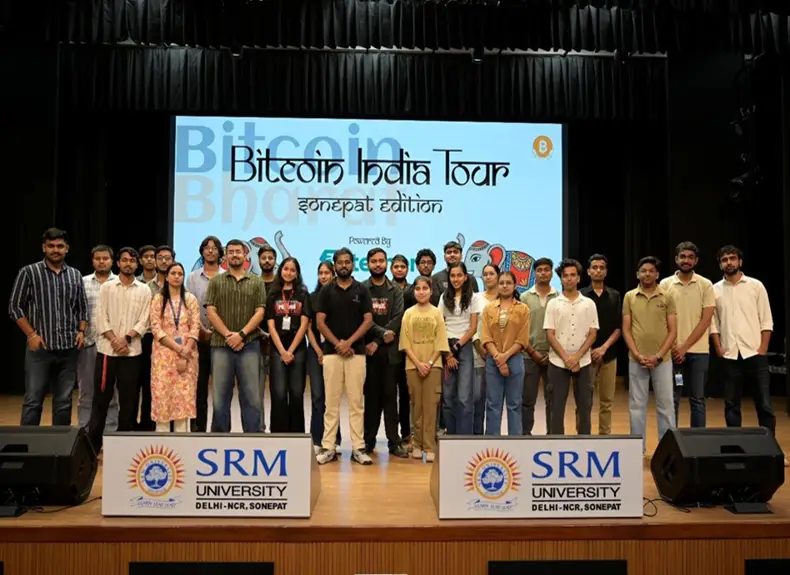
- Group Photograph
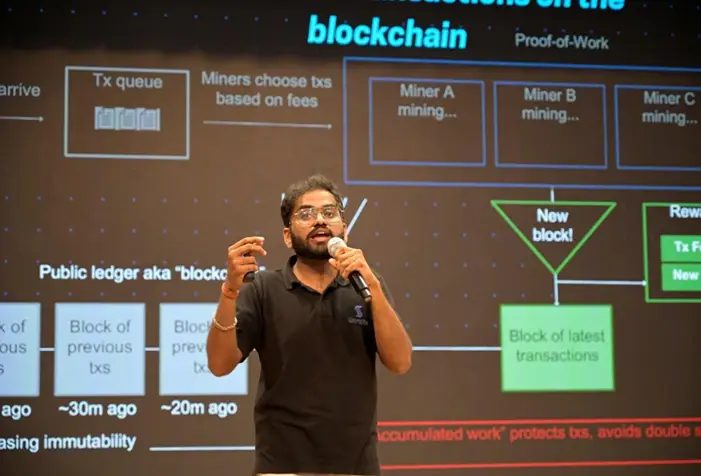
The main session provided students with an introduction to the evolution and
characteristics of money, followed by an exploration of Bitcoin as a scarce and
decentralised digital asset. The speaker explained the fundamental concepts underlying
Bitcoin and its ecosystem, including transactions, public and private keys, nodes,
mining, Proof of Work, blocks, hashing, and the functioning of the Bitcoin blockchain.
The session further introduced participants to the concept of self-custody of digital
assets, with emphasis on private keys, seed phrases, and different types of
cryptocurrency wallets, including hot and cold wallets. The discussion highlighted the
importance of understanding wallet security and the responsibility associated with
maintaining control over one's digital assets.
As part of the hands-on component, students were guided through the process of
creating or linking their wallets and were introduced to the Keet application.
Participants were also encouraged to join the relevant community space and provide
their wallet address/ID as part of the giveaway activity. This practical engagement
enabled students to gain firsthand exposure to digital wallets and applications associated
with the broader Bitcoin ecosystem.
The programme concluded with an interactive question-and-answer session, during
which participants had the opportunity to clarify their queries and engage with the
speaker on various aspects of Bitcoin and related technologies. A group photograph was
taken at the conclusion of the event. Participation certificates were arranged for all
participants and will be issued subsequently in recognition of their participation in the
programme.
The event provided students with valuable exposure to Bitcoin, Blockchain, and Web3
technologies, an emerging technology domain that continues to evolve across the global
digital ecosystem. The session aimed to broaden students' understanding of
decentralised technologies while encouraging them to explore their academic, research,
and practical applications.
The session encouraged students to:
- Develop an interest in Blockchain, Bitcoin, and Web3 technologies.
- Understand the fundamental concepts of Bitcoin, blockchain, and decentralised systems.
- Explore potential academic, research, and innovation opportunities in blockchain technology.
- Identify real-world applications and use cases of blockchain and decentralised technologies.
- Develop an innovative mindset towards decentralised architectures and technology-driven solutions.
- Gain awareness of emerging industry trends, skill requirements, and career opportunities in the blockchain and Web3 ecosystem.
The event further promoted a learning-oriented approach centred around the four key
principles reflected in the event theme:
This framework encourages students to progress from conceptual learning and
meaningful discussion to exploration, experimentation, and practical implementation.
By connecting theoretical knowledge with hands-on activities and industry perspectives,
the programme sought to foster curiosity, innovation, and a greater understanding of
emerging technologies among the participants.
Conclusion
The “Bitcoin Bharat × Webytes – Empowering Students with Bitcoin & Blockchain
Insights” event was a meaningful initiative aimed at introducing students to Bitcoin,
Blockchain, and Web3 technologies, and enhancing their awareness of this rapidly
evolving technology domain.
The programme successfully brought together academic learning, industry expertise,
and student engagement on a common platform. Through discussions on Bitcoin,
blockchain, decentralisation, financial literacy, and innovation, the session encouraged
students to broaden their technological perspective and explore the concepts,
applications, and possibilities associated with decentralised systems.
The theme “Shaping a Decentralized Tomorrow” aptly reflected the vision of the
programme. The LEARN ? DISCUSS ? EXPLORE ? BUILD approach encouraged
students to move beyond theoretical understanding and engage with emerging
technologies through discussion, exploration, and practical activities.
Overall, the programme served as an effective platform for knowledge sharing,
technological awareness, industry interaction, and experiential learning. It contributed
to fostering curiosity, innovation, and technology awareness among students and
supported the broader objective of developing a future-ready and innovation-oriented
student community at SRM University Delhi-NCR, Sonepat.